
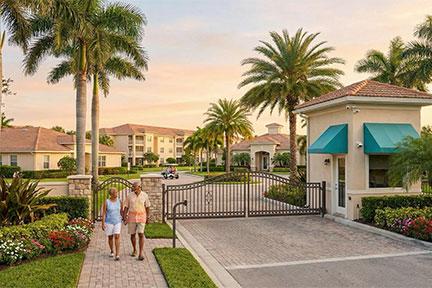
West Palm Beach hands retirees a sunny blend of culture, healthcare, and more than two dozen age-restricted neighborhoods. Roughly 71 percent of those 55-plus communities sit behind a gate, giving you instant security and a laid-back, resort vibe.
Yet abundance breeds confusion. Which address matches your lifestyle, budget, and long-term plans? The checklist ahead—location, home style, HOA math, and more—will help you decide, then we’ll test it by comparing three popular communities side by side.
Ready to pick the gate that feels like home? Let’s dive in.
Why West Palm Beach attracts gated 55-plus living
Mild winters draw many retirees to Florida, but West Palm Beach adds perks you will not find everywhere else. A walkable downtown, Broadway-level shows at the Kravis Center, and Atlantic beaches that stay swimsuit-ready in January create a year-round vacation feel.
Healthcare is close by. Good Samaritan Medical Center and St. Mary’s Medical Center sit within about three miles of most 55-plus neighborhoods, so routine checkups and emergencies never turn into a road trip. Palm Beach International Airport is roughly ten minutes from the city core, which means grandkids can land before your coffee cools.
Gated entrances turn that convenience into calm. Guards verify visitors, traffic slows, and midnight knocks fade away. Snowbirds gain peace of mind when they head north for the summer, while full-timers enjoy quiet streets for evening walks.
Inside the gates, most communities add resort-style touches such as pools, pickleball courts, and on-site cafés. Security blends with amenities, freeing you to focus on fun instead of fences.
The buyer’s comparison checklist
1. Location and surroundings.
Where your future front gate sits shapes nearly everything—daily errands, doctor visits, even how often grandkids drop by.
Start with distance to essentials. Grocery stores, pharmacies, and a full-service hospital should sit within a ten-minute drive so routine life stays easy even if you stop night driving. In West Palm, communities along Okeechobee Boulevard, such as Baywinds or Golden Lakes, meet that mark; Publix, Target, and St. Mary’s Medical Center cluster nearby. A quick browse of Palm Beach real estate on an interactive map lets you filter for 55-plus communities and verify drive times to stores and hospitals before you even book a showing.
Interactive Map of West Palm Beach 55 Plus Communities Screenshot
Next, weigh the commute to fun. If brunch on Clematis Street or evenings at the Kravis Center light you up, a downtown-adjacent address cuts back on ride-share fares. Love the beach? Century Village’s gate is roughly fifteen minutes from the sand, while western communities double that ride but trade ocean proximity for quieter streets and bigger greenbelts.
Think about travel too. Palm Beach International Airport sits just south of Belvedere Road. Living east of the Turnpike means you and visiting family can roll from gate to baggage claim in under twenty minutes. Farther-west options, such as Westlake, push airport runs beyond thirty minutes.
Finally, tour the surrounding area at different hours. Morning jogs reveal traffic noise, afternoon drives expose school-zone slowdowns, and a dusk trip shows street lighting. Choose a setting that feels safe and lively at the right times, not just pretty in a brochure.
2. Home types and maintenance model.
West Palm’s gated 55-plus communities offer three main housing styles—condos, villas, and single-family homes. Each one rewrites the fine print on space, privacy, and who fixes the roof.
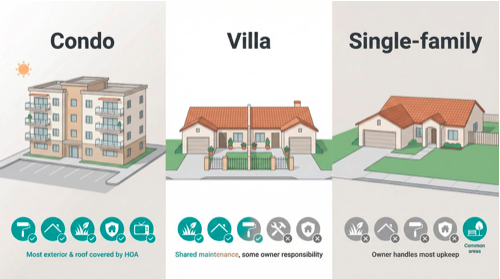
Condos keep life light. Your HOA fee often bundles exterior paint, roof reserves, lawn care, building insurance, and even cable, so you budget once and forget it. The trade-off is size: one or two bedrooms, shared walls, and parking lots instead of private driveways. If you travel often or crave zero yard tools, this lock-and-leave setup shines.
Move to attached villas and you gain elbow room without losing simplicity. Picture single-story, two-bedroom units paired back-to-back, each with a garage and a patch of patio. HOAs still mow the grass and pressure-wash roofs, but you control interior upgrades and enjoy windows on three sides. Villas suit owners who like a small garden yet refuse Saturday chores.
Single-family homes deliver maximum privacy—driveway, fenced yard, no upstairs neighbor practicing the piano. You also shoulder the upkeep: trimming palms, replacing shingles, and carrying your own windstorm policy. In return, you secure larger floor plans and the freedom to tweak exteriors within community guidelines.
List how much maintenance you want on your calendar before touring. Then match it to the housing type. The best amenity is a Saturday morning that looks exactly the way you want.
3. Amenities and activities.
Amenities shape your calendar, not just your property value. Picture waking to sunrise yoga by the lake, mid-morning pickleball, then a matinee in the community theater—all without starting the car. That rhythm exists in West Palm’s largest 55-plus enclaves, where clubhouses rival cruise ships.
Smaller neighborhoods trade quantity for intimacy: one pool, perhaps two tennis courts, and socials run by resident volunteers who greet you by name. Decide whether you thrive on constant motion or prefer quieter corners with the option to join in, not the pressure to keep up.
Cost follows perks. A golf course inside the gates usually means mandatory dues beyond the standard HOA fee. Love the game? Worth every dollar. Never swing a club? That line item feels wasted. Study the budget and pay only for fun you will actually use.
Finally, inspect condition, not just marketing photos. Fresh paint, modern fitness gear, and a busy events board signal a board that reinvests in the property—and your lifestyle. A tired pool deck or empty calendar hints at assessments or apathy ahead.
4. HOA fees, reserves, and insurance.
Monthly dues look harmless on a listing sheet until you add special assessments, mandatory golf memberships, or rising insurance premiums.
Ask for the latest budget and reserve study. A healthy reserve fund saves you from sudden large roof or elevator bills. Florida tightened condo-reserve rules after the Surfside tragedy, then relaxed deadlines in 2025 to give boards breathing room, but the lesson holds: under-funded buildings shift costs to owners sooner or later.
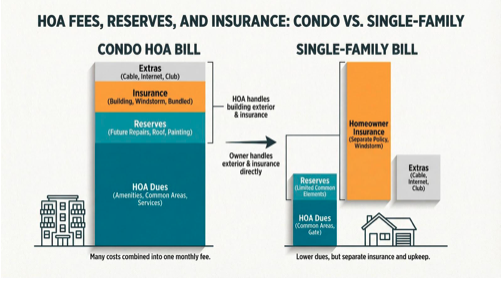
Insurance piles on. Hurricanes and litigation have driven statewide property-insurance rates up more than twenty percent per year, and many associations absorb those jumps by raising dues. Condos often bundle windstorm coverage into fees, while single-family HOAs leave you to secure your own policy. Compare both numbers, not just the headline rate.
Drill into extras. Does the community charge a separate club or cable package? Are repairs already approved but not yet billed? One frank conversation with the treasurer prevents sticker shock later.
Finally, sanity-check the value. A fee of four hundred dollars that covers lawn care, cable, building insurance, and a concierge gym can beat a two-hundred-dollar fee that only mows common areas. Pay for peace of mind, not surprises.
5. Rules, regulations, and community culture.
Every gate posts rules on the inside as well as the outside, and those bylaws dictate daily life as surely as curb appeal hooks a buyer.
Age restrictions come first. Federal law lets 55-plus communities require that at least one resident in every home is fifty-five or older, but each HOA customizes the fine print. SquareFoot Homes’ guide to 55-plus communities points out that the law also expects at least 80 percent of all homes to be occupied by someone 55 or older, and boards must keep written age-verification records to stay compliant.
Knowing that threshold lets you ask sharper questions about enforcement before you sign, rather than learning the rules the hard way at move-in. Some allow spouses under fifty with no fuss, others set a lower limit at forty or cap younger guests to thirty-day stays. If you expect college-age grandkids for the summer, verify the visitor policy before you sign.
Pets follow close behind. One neighborhood may welcome two dogs up to thirty pounds, while the gate across the street bans canines altogether and only tolerates indoor cats. Bring vet records on your tour so approvals happen on the spot, not during closing chaos.
Parking, paint colors, even holiday décor land in the covenants too. A pickup truck in the driveway or a pergola on the patio may be fine in one place and a citation in another. Skim the rulebook and decide whether structure feels comforting or constricting.
Then there is vibe, the intangible that turns houses into home. Attend a Friday happy hour or Tuesday board meeting. Are residents laughing, debating, volunteering? Do you see chess in the card room or line dancing in the ballroom? Choose the soundtrack that matches your tempo.
6. Security and safety features.
A gate is only the opener. Real security lives in the details behind it.
Staffing matters. A live guard who checks licenses 24 / 7 delivers stronger deterrence than a keypad code shared by every landscaper. Ask how many entrances the community controls and whether cameras back each one up.
Roving patrols add confidence. Some associations hire off-duty deputies who cruise after dark, enforce speed limits, and jump batteries for stranded residents. Others rely on neighbor volunteers. Decide which model calms you.
Hurricane readiness rounds out the checklist. Look for impact windows, clubhouse generators, and a written storm plan that explains debris removal and resident wellness checks. West Palm’s weather seldom surprises, but preparation beats scrambling for plywood.
Finally, walk the grounds at dusk. Are sidewalks lit, ponds fenced, addresses visible to first responders? Those quiet cues reveal how seriously the board treats safety when no realtor is watching.
7. Resident demographics and lifestyle fit.
Age-restricted does not mean age-uniform. A community built in the 1970s often hosts retirees in their seventies and eighties, while newer developments draw buyers barely past fifty-five. If you hope to find tennis partners who still work part-time, target recent builds. Craving a low-key rhythm? An established condo complex may feel like home.
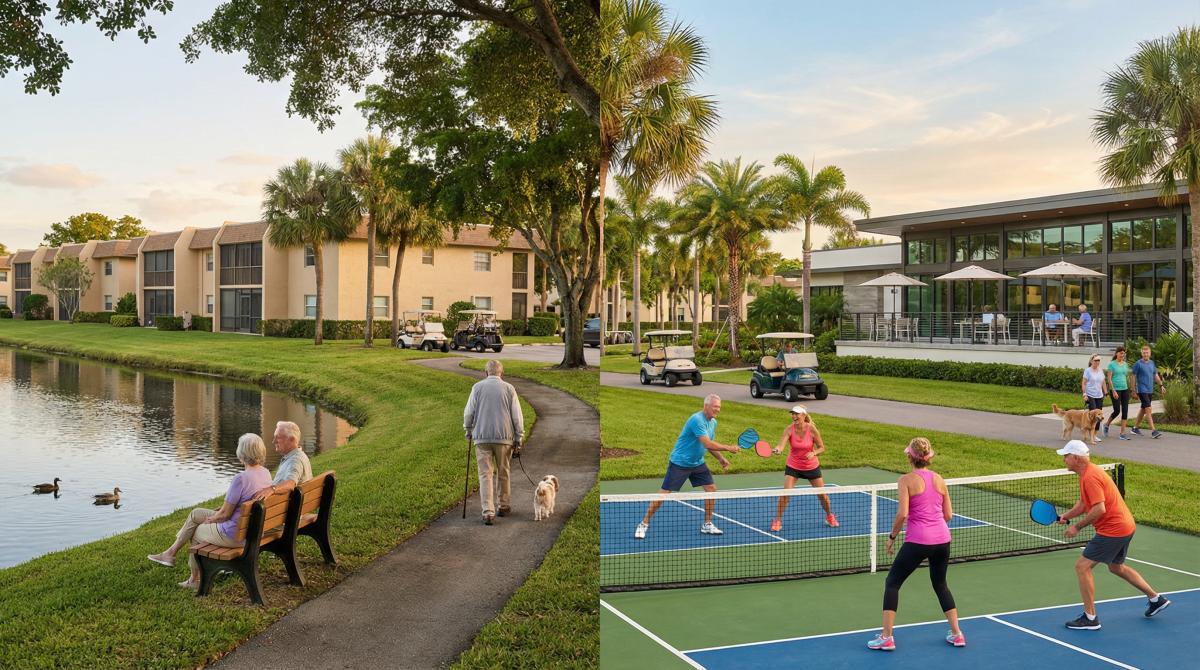
Seasonality shifts the energy too. Snowbird-heavy communities buzz from November through April, then settle into a peaceful hush when northern license plates head home. Year-rounders enjoy empty pools but fewer club meetings in summer. Decide whether you want constant activity or a break in the calendar.
Cultural mix counts. Some neighborhoods attract Northeastern transplants, others blend Midwesterners and Canadians, and a few mirror South Florida’s broader diversity with Spanish heard on the pickleball courts. Attend a social hour and listen. The accents, music, and potluck menus tell you if you will fit right in.
Finally, note how residents interact. Do people wave from golf carts, invite newcomers to trivia night, or keep earbuds in on the walking path? Vibe trumps marketing. When the human chemistry clicks, square footage and pool counts fade into the background.
8. Resale value and long-term considerations.
Even dream homes deserve an exit strategy. Florida’s senior population keeps demand strong, yet resale times in 55-plus communities still average longer than the general market. Plan for months, not weeks, when it is time to sell.
Value hinges on three drivers. First, location: addresses near I-95 and the airport always attract buyers, while far-west suburbs trade speed for space. Second, financial health: communities with well-funded reserves and modern amenities command premium prices because incoming owners expect fewer surprises. Third, flexibility: HOAs that allow rentals after one year widen the buyer pool to investors and seasonal snowbirds, propping up values.
Think ahead on aging in place too. Single-story layouts, wide doorways, and shower grab bars avoid costly remodels later. Some large communities run shuttles to grocery stores or offer on-site home-care referrals, letting residents stay put even if driving or mobility changes.
Finally, watch new construction trends. A fresh wave of active-adult projects north of West Palm adds competition and raises the bar on amenities. Choosing a community that updates clubhouses and embraces pickleball now keeps your property appealing when those shiny neighborhoods mature.
Buy with today’s lifestyle in mind, but keep tomorrow’s sale in the back pocket.
Comparing three notable communities
West Palm Beach offers dozens of gated 55-plus options, yet a quick side-by-side look at a few well-known names helps the checklist come alive. Below, we tour three very different neighborhoods, starting with the condo giant many snowbirds know by heart.
Century Village West Palm Beach – budget-friendly, amenity-rich
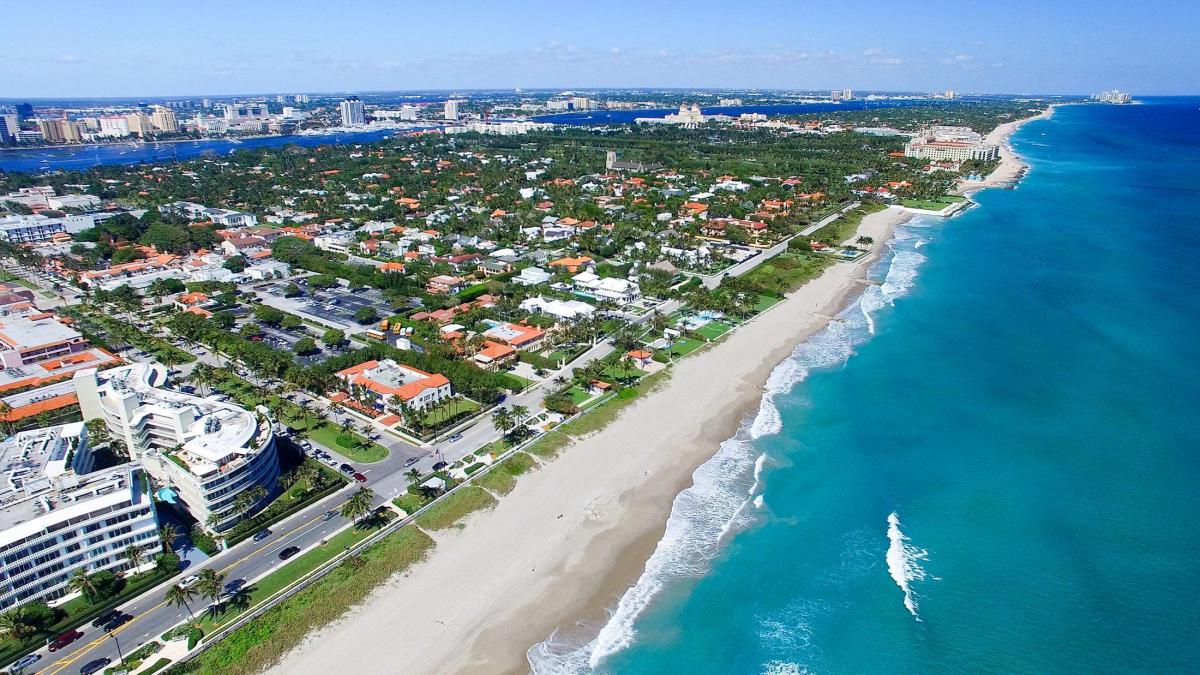
Century Village West Palm Beach Budget Friendly Condo Community Photo
Century Village feels like a self-contained town wrapped in security. More than 6,500 one- and two-bedroom condos circle a 90,000 square-foot clubhouse, indoor and outdoor pools, tennis, pickleball, a 1,200-seat theater, and a resident-only bus system.
Prices grab attention first. Original-condition one-bedroom units still trade near the low $100s, while fully renovated lake-view twos push toward $200 K. Monthly condo dues land around $400 and cover building insurance, water, cable, lawn care, and all those amenities.
The vibe is social and seasoned. Most owners are in their seventies; winters buzz with clubs and shows, summers slow to a gentle hum. No pets are allowed, so dog lovers should look elsewhere. Security stands out with multiple staffed gates and roving patrols.
Century Village rewards buyers who want an active calendar at a starter price and who are comfortable with 1970s buildings that will need periodic roof or elevator work.
Baywinds – modern villas and homes with a resort heart
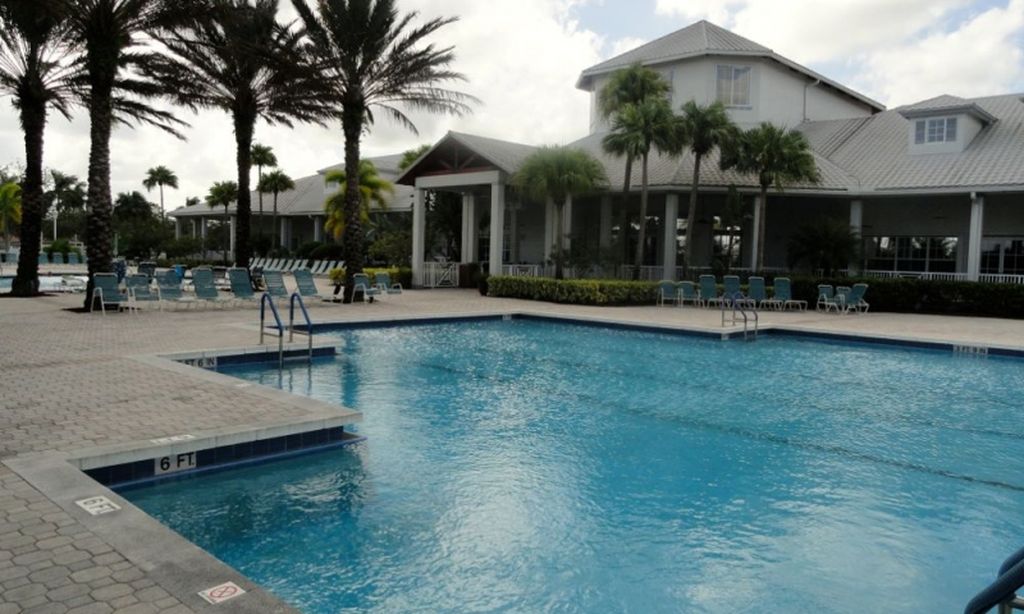
Baywinds West Palm Beach Gated Entrance and Resort Style Clubhouse Photo
Drive about seven miles west of downtown and the palm-lined gates of Baywinds open to an energetic, younger-leaning crowd. Built in the early 2000s, this 1,100-home community mixes attached villas and single-family houses, all anchored by a clubhouse that rivals a boutique resort.
Amenities include three pools (one designed for resistance walking), a modern fitness center, bocce, shuffleboard, eight Har-Tru tennis courts, and a calendar packed with concerts, lectures, and themed dinners. Residents joke that you need a day planner just to keep up.
Homes range from roughly 1,400 to 2,500 square feet. Current resale prices sit in the mid-$300s for villas and climb toward the mid-$400s for single-family models. HOA fees average about $400 a month, covering lawn care, staffed gate security, clubhouse upkeep, and common-area insurance; owners carry individual wind and flood policies.
Culture skews “young 55.” Many residents still work remotely or volunteer, so daytime activity hums year-round rather than spiking only in snowbird season. Pets are welcome with size limits, golf carts cruise the lakeside paths, and Friday happy hours spill onto the patio at sunset.
Baywinds suits buyers who crave a lively schedule, updated floor plans, and the freedom of a private driveway without losing the maintenance-light comforts of a gated neighborhood.
Golden Lakes Village – lakeside condos with neighborly charm
Golden Lakes Village sits just east of Baywinds yet offers a different rhythm. Built in the late 1970s and early 1980s, its 1,088 condos ring a chain of lakes that double as sunset backdrops and morning walking routes.
Two modest clubhouses anchor the community, each with a pool, fitness room, and card lounge. Events lean casual: potluck suppers, bingo, and volunteer-run day trips. A courtesy bus carries residents to supermarkets and malls, a perk for anyone downsizing to one car.
Condos range from 700 to 1,200 square feet. Prices hover between $120 K and $180 K, drawing budget-minded buyers who still want gated security. Monthly dues of roughly $375 cover water, cable, exterior maintenance, and staffed gates. Phase B allows a small dog, while Phase A remains pet-free, so confirm the building before falling for a furry friend.
The resident mix trends older and full-time, which means quieter summers and a clubhouse that never feels crowded. Many units still show original finishes, so handy owners can build equity with tasteful renovations. As with any vintage condo, check reserve balances and confirm recent roof or elevator projects to avoid surprise assessments.
Golden Lakes shines for buyers who prize affordability, water views, and a close-knit culture where neighbors know your name—and your grandkids’ names by the second visit.
Making your decision: next steps
- Schedule on-site visits. Tour your top contenders on a weekday and a weekend to see everyday activity, not a staged open house. Linger, smell the clubhouse coffee, watch water-aerobics, and chat with residents walking their dogs.
- Request documents early. Ask for the latest HOA budget, reserve study, rules, and recent meeting minutes. Scan for rising insurance costs, planned assessments, or heated debates that hint at cultural fit.
- Test the commute. Drive from each gate to your favorite grocery, hospital, and the beach during normal traffic. A map cannot reveal that one left turn that always backs up at 4 pm.
- Score your findings. Rate each community on the eight factors above, then weigh what matters most to you. When numbers and instincts agree, you have found your next front gate.