

Quick Answer
Selecting a home that supports comfortable aging involves prioritizing accessibility, safety, and future adaptability. Focus on single-level layouts, wide doorways, and features like lever handles or zero-step entries to maintain mobility. Consider location near healthcare and community resources, alongside potential home modifications for seniors to address evolving needs. Many older adults prefer staying independent, so evaluate options that blend comfort with practicality for long-term well-being.
Introduction
Many people picture their later years unfolding in familiar surroundings, surrounded by memories and personal comforts. As physical abilities shift over time, the right living space becomes essential to preserve freedom and daily ease. Choosing wisely early on helps avoid stressful moves later while supporting continued independence.
A thoughtful approach often includes exploring various paths, from adapting an existing house to considering specialized environments. For instance, communities designed with thoughtful amenities and flexible care can provide a seamless blend of autonomy and support. Luxury senior living in Сalgary offers one such refined example, where spacious suites and wellness-focused features align with evolving lifestyles.
The goal remains straightforward: find a residence that grows with you. Key elements like accessible design, safety measures, and proximity to essential services play central roles in making everyday routines enjoyable and secure. Thoughtful planning opens the door to years of confident, fulfilling living.
Key Features to Look for in Homes Supporting Retirement Living
Independent living for seniors means keeping control over daily choices while living in a space that eases rather than hinders movement and comfort. And the foundation of comfortable retirement living rests on design choices that reduce physical strain and promote safety without sacrificing style or dignity. A well-suited home anticipates changes in strength, balance, and energy rather than reacting to them after they arrive.
Single-Level or Minimal-Stair Living
Stairs pose one of the biggest fall risks as mobility naturally declines. Single-storey homes eliminate this concern entirely. If a two-level residence feels necessary, prioritize layouts with the primary bedroom, full bathroom, and main living areas all on one floor. Many modern builds include a main-floor laundry room and guest suite to keep everything accessible.
Wide Doorways and Hallways
Standard doorways measure about 30–32 inches. A minimum of 36 inches allows easy wheelchair or walker passage, should one ever be needed. Hallways at least 42 inches wide provide ample turning space. These subtle upgrades make future modifications far less disruptive and expensive.
Non-Slip Flooring and Threshold-Free Entries
Hardwood, luxury vinyl plank, or textured tile surfaces offer better traction than glossy ceramic. Zero-step entries (no raised thresholds at exterior doors) prevent tripping, especially when carrying groceries or using mobility aids. Ramps with gentle slopes (1:12 ratio or better) can replace steps if the lot allows.
Lever-Style Door Handles and Faucets
Round knobs become difficult with arthritis or reduced grip strength. Lever handles open doors with a simple push or pull. Similarly, single-lever faucets and touchless models reduce wrist strain when washing hands or filling pots.
Bright, Even Lighting
Aging eyes need two to three times more light than younger ones. Layered lighting – overhead fixtures, task lamps, and motion-sensor night lights – eliminates dark corners and shadows that hide obstacles. Dimmable LED bulbs save energy while allowing brightness adjustments throughout the day.
Smart Home Technology for Added Peace of Mind
Voice-activated assistants control lights, thermostats, and entertainment systems without reaching for switches. Automatic shut-off stove sensors prevent forgotten burners from starting fires. Video doorbells and smart locks let residents see and speak to visitors from anywhere in the house.
Accessible Bathroom Layouts
Bathrooms deserve special attention because slips here cause the most serious injuries. Walk-in showers with built-in benches, grab bars disguised as towel bars, and curbless entries stand out as smart investments. Raised-height toilets (comfort height, 17–19 inches) align better with aging-in-place joints.
Adequate Storage at Comfortable Heights
Lower cabinets and pull-out shelves eliminate the need to stretch or bend excessively. Closet organizers with adjustable rods keep clothing within easy reach. Avoid deep upper cabinets that require step stools.
These features work together to create an environment where independence feels natural rather than forced. A home equipped this way often requires fewer major renovations later, preserving both financial resources and emotional energy.
Essential Home Modifications for Seniors 
Even the most thoughtfully designed senior living options may need targeted updates as needs evolve. The good news? Many of the most effective modifications are surprisingly affordable and can be completed in stages rather than all at once. Strategic changes focus on safety, ease of use, and preserving dignity – no one wants their living space to feel like a hospital.
Bathroom Safety Upgrades
This room usually requires the earliest attention because wet surfaces and hard fixtures create high-risk zones.
- Install grab bars beside the toilet and inside the shower (choose ones rated for 250+ pounds and mount them into studs).
- Add a fold-down shower bench or built-in seat so standing for long periods isn’t necessary.
- Replace standard shower doors with a frameless glass panel or curtain to eliminate the high step-over threshold.
- Consider anti-scald shower valves that limit water temperature to a safe range.
Kitchen Accessibility Improvements
Cooking and food preparation remain central to daily independence for most people. Small adjustments keep these activities enjoyable:
- Pull-out shelves in lower cabinets bring pots and pans to waist height.
- Lower countertop sections (around 30–32 inches) make chopping and mixing easier from a seated position.
- Install motion-sensor under-cabinet lighting to brighten work surfaces without reaching for switches.
- Replace stove knobs with large, easy-grip controls or add a portable induction burner at a safer height.
Interior Mobility Enhancements
Beyond the basics already covered in layout, a few practical additions smooth movement inside the house.
- Widen interior doorways to 34–36 inches if they’re narrower (a carpenter can often do this without replacing the entire frame).
- Install permanent or portable stair lifts if the main living areas must remain on multiple levels.
- Add sturdy handrails on both sides of any remaining stairs, extending them 12 inches beyond the top and bottom steps.
- Replace thick-pile carpet with low-pile or hard-surface flooring that’s easier to roll over and less likely to catch feet or canes.
Exterior and Entryway Adjustments
Getting in and out safely sets the tone for every day. A no-step entry can be achieved with a gently sloped walkway or modular ramp system. For example, motion-activated exterior lights reduce the chance of stumbling in the dark. And keyless entry systems (keypads or smart locks) eliminate fumbling with keys, especially helpful on cold or rainy days.
Quick Comparison: Cost vs. Impact
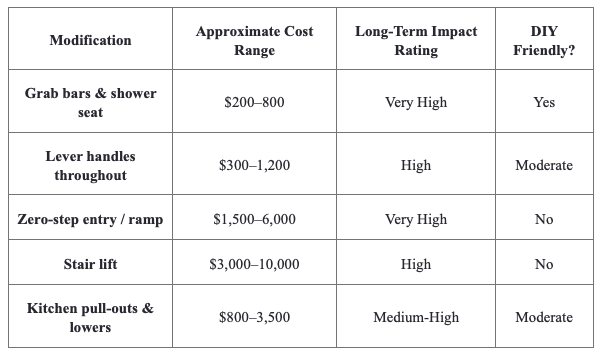
These upgrades rarely require gutting the entire house. Many can be phased in over several years, matching both budget and changing requirements. The earlier small changes begin, the longer a familiar home can remain a comfortable, capable place to live.
Key Takeaways for Comfortable Long-Term Residences
Choosing where and how to live in later years comes down to aligning daily life with personal values and realistic expectations. Prioritize spaces that support mobility, safety, and social connection while remaining flexible enough to adapt over time. Whether staying in a familiar house with thoughtful updates or exploring purpose-built communities, the focus should remain on preserving independence and joy.
Start the conversation early, involve trusted professionals when needed, and revisit the plan regularly as circumstances evolve. A well-considered residence doesn’t just shelter the body; it nurtures continued vitality and peace of mind.