
Researching mobility scooters while managing everything else on your caregiving plate can feel overwhelming. You want your loved one to stay independent and safe, but you're also thinking about whether a scooter will actually fit through your hallways, how you'll charge it, and what happens if something goes wrong.
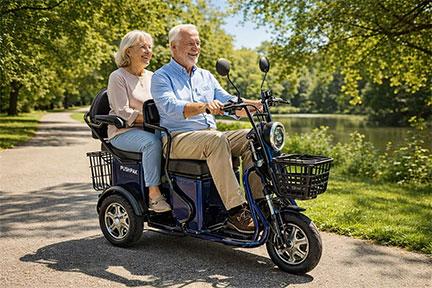
If you're considering a 2 seater mobility scooter so you can accompany your loved one on outings, you're not alone. Many families find that riding together provides peace of mind during errands, neighborhood walks, or medical appointments. But two-seater models come with specific considerations around weight capacity, turning space, and storage that single-rider scooters don't require.
This guide walks you through the practical details that matter most, so you can choose a 2 seater mobility scooter that fits your loved one's daily life and your home reality.
Start With How You'll Actually Use the Scooter
Map Your Daily Routes and Home Layout
Before comparing models, get specific about where the scooter needs to go:
- Where: indoor, outdoor, or both?
- Terrain: Smooth floors, cracked sidewalks, hills, or mixed surfaces
- Riders: solo use or a mobility scooter for two people
- Storage: inside, garage, or covered parking
Then measure your home. This is where most purchase mistakes happen.
Grab a tape measure and check:
- Your narrowest doorway and hallway width
- The tightest corner turn (often where a hallway meets another hallway or a room)
- Threshold heights (the little lip between rooms or at exterior doors)
- Where you'll park and plug in the scooter
Most interior doors need to be at least 36 inches wide to provide 32 inches of clear passage, according to accessible home design standards. If your hallways are narrower than the scooter's width, it won't matter how great the features are. You still won't be able to use it where you need it most.
The Specs That Predict Day-to-Day Performance
Stability and Turning Radius: Why Predictability Matters More Than Speed
For most families, a scooter that feels steady and easy to control beats one that goes fast.
Look for:
For most families, predictability beats top speed.
Look for:
- A stable base (often four wheels for outdoor use and higher loads)
- Anti-tip features if you'll use ramps or uneven pavement. These prevent the scooter from tipping backward on inclines, especially important with two riders
- A turning radius that matches your tightest turn at home
Ask for the turning radius in inches and compare it to your measurements. If a scooter can't turn where you live, it won't be used consistently.
Weight Capacity and Comfort for Two Riders
For a two-seater mobility scooter, weight capacity is a safety essential.
Check the maximum weight capacity and compare it to your real-world needs: two riders plus any bags, groceries, or medical equipment you might carry. If you're close to the weight limit, the scooter may struggle with hills or uneven terrain, and battery range will be shorter.
Consider seat support and suspension if you’ll be riding outdoors. Bumpy sidewalks and curb transitions feel much rougher without good suspension, especially on longer rides.
Make sure the controls are comfortable to reach. The tiller (the handlebar with the steering and speed controls) should be easy to grip and adjust without straining.
Keep in mind that two riders mean a longer scooter overall. You'll need more space to park it and more room to turn corners. Measure twice before you buy.
Battery Range and Charging: What the Numbers Really Mean
Manufacturers often advertise range estimates like "up to 20 miles per charge," but those numbers are usually based on ideal conditions: flat terrain, mild weather, and a single lightweight rider.
For a two-person mobility scooter, range gets shorter because you're carrying more weight. Ask the retailer or manufacturer what the realistic range is with two riders. If they quote 20 miles for a single rider, expect closer to 12-15 miles with two people, especially on hills.
The U.S. Consumer Product Safety Commission recommends always using the charger that came with your scooter and keeping the charging area clear of clutter to reduce fire risk. Simple habits like this make a big difference in long-term safety.
Safety Features to Prioritize
Controls, Braking, and Speed Management
A good scooter should feel easy to control without sudden jerks or surges when you press the throttle.
Prioritize:
- Smooth acceleration and deceleration
- Clear, easy-to-reach controls
- Predictable braking and a secure parking brake
- Speed settings you can reduce in crowded areas
If possible, test drive the scooter on the kinds of surfaces your loved one will actually encounter: driveway transitions, sidewalk cracks, and the gentle slope of curb ramps.
Visibility and Shared Spaces
Even if your loved one doesn't plan to ride in traffic, scooters often travel through parking lots, crosswalks, and sidewalks shared with pedestrians and cars. Being visible matters.
Look for:
- Headlights and reflectors so drivers and pedestrians can see your loved one in low light
- A horn to alert people nearby
- Mirrors if turning to look behind is difficult due to neck pain or limited mobility
Visibility is only part of the safety equation. Route planning helps, too. According to the NHTSA, adults 65 and older made up about 18% of pedestrian fatalities in 2021. Encourage your loved one to use marked crossings, choose well-lit routes, and avoid busy road edges whenever possible.
Safer Transfers and Home Setup
Many incidents happen while getting on and off, not while driving. Make the setup do some of the safety work.
Plan for:
- A flat, well-lit parking spot
- Enough space to walk around the scooter without squeezing between it and a wall or car
- Charging that doesn’t create tripping hazards
If an enclosed, two-person model is on your shortlist, explore options like enclosed mobility scooters for sale and compare them by stability, ease of entry, visibility, and storage needs.
How to Test Drive and Compare Models
A Five-Minute Test that Reveals a Lot
If you can test drive, don’t just circle a showroom floor. Try to simulate your real use.
- Start and stop: Does it accelerate smoothly, and can you stop without a jolt?
- Practice tight turns: Try a U-turn and a sharp right-angle turn like you'd make in a hallway. Does the scooter feel stable, or does it wobble?
- Test on an incline: Find a gentle slope and check whether it holds position when stopped.
- Roll over surface changes: Roll over a small threshold or textured surface to see if it feels stable.
- Test with two-riders if possible: For a two-person mobility scooter, test with the typical combined load if possible, or at least ask how handling changes near max capacity.
You’re looking for confidence and predictability, not excitement. If the scooter feels unpredictable in a controlled showroom environment, it will feel worse on a cracked sidewalk or busy parking lot.
Two-Seater and Enclosed Models: The Tradeoffs
Weather Protection versus Size and Handling
A 2-seater enclosed mobility scooter can add comfort in the wind and light rain. The tradeoffs are usually about scale:
- More weight and a larger turning footprint
- More storage needs (often garage or covered space)
- Less portability if you need to transport the scooter by vehicle
Ask about ventilation and sightlines. A comfortable enclosure still needs clear visibility and controls that are easy to reach while seated.
Serviceability and Total Cost of Ownership
A scooter purchase is a maintenance relationship. Before you buy, ask about local service, parts availability, warranty scope, and battery replacement cost.
Small home modifications can also reduce daily friction. Widening doorways, adding ramps, or improving lighting, can make mobility devices easier to use and park.
Choosing the Right Scooter
Selecting a mobility scooter is a practical decision. Your home layout, daily routes, storage reality, and the scooter’s stability all have to line up. For a 2-seater mobility scooter, prioritize stability, capacity, predictable controls, and home fit before comfort extras. Measure first, test drive on real surfaces, and choose a model that makes safe, repeatable trips feel easy.