
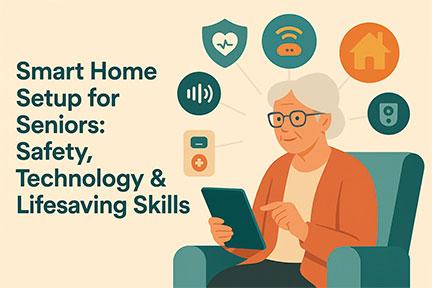
Creating a safe, comfortable, and supportive home environment is one of the most important steps families can take as their loved ones age. Today’s smart technology can make life easier, more connected, and significantly safer but devices alone aren’t enough. Many families also consider essential preparedness steps, such as encouraging loved ones to take CPR and First Aid Training, to ensure confidence and readiness in unexpected situations. When combined with the right smart home setup, these skills form a powerful foundation for independence, safety, and peace of mind.
Why Smart Homes Are Transforming Senior Living
The modern senior lifestyle is no longer defined by limitations; it's shaped by empowerment. Smart home devices are giving older adults more control than ever, helping them manage their health, communicate with family, and perform everyday tasks with greater ease.
Some of the most impactful benefits include:
- Hands-free access to lights, doors, reminders, and communication
- 24/7 safety monitoring without being intrusive
- Better support for aging in place, reducing the need for constant in-person supervision
- Greater peace of mind for families, especially those caregiving from a distance
But smart homes shouldn’t be thought of as just gadgets. They are tools that help create safer living environments especially when paired with real-world preparedness.
1. Voice-Activated Assistants: Convenience & Emergency Readiness
Devices like Amazon Alexa, Google Home, and Siri have become essential for seniors who want independence but still need access to help quickly.
Seniors can use voice assistants to:
- Make hands-free phone calls
- Set medication reminders
- Control lights and appliances
- Ask for weather updates or daily routines
- Call for help even from another room
This is particularly valuable for individuals with mobility limitations, arthritis, or balance concerns.
Even better, many families integrate emergency contacts directly into smart speakers so seniors can simply say, Call my daughter, or Call for help.
2. Smart Lighting & Fall-Prevention Devices
Falls are one of the leading causes of injury among seniors. Smart lighting systems help reduce risk by automatically illuminating hallways, bathrooms, and bedrooms.
Popular options include:
- Motion-sensor night lights
- Smart bulbs that turn on at dusk
- Floor lighting strips that illuminate pathways
- Automated bedside lights that activate when someone stands up
These simple changes dramatically improve nighttime visibility and reduce reliance on switches or dark hallways.
3. Health Monitoring Devices That Make Life Easier
Smart health devices can help seniors take charge of their wellness while providing reassurance to loved ones.
Examples include:
- Smartwatches that track heart rate, steps, and falls
- Blood pressure cuffs that automatically log results
- Medical alert pendants with GPS and emergency contact buttons
- Smart scales, thermometers, and glucose monitors that sync with apps
For families supporting seniors remotely, many of these devices allow shared access so adult children can receive alerts or view readings from anywhere.
4. Home Security Systems Designed for Senior Safety
Modern home security is more than burglar alarms; it's about creating a protective environment that feels safe, not restrictive.
Senior-friendly systems offer:
- Doorbell cameras with two-way communication
- Smart locks that eliminate the need for keys
- Window and door sensors that notify caregivers when opened
- Automated locks that engage at preset times
- Activity sensors that track daily routines
These features reduce the stress of accidental lockouts or vulnerability points around the home.
5. Pairing Smart Technology with Lifesaving Skills
While technology enhances safety, nothing replaces human capability. This is why many families include CPR and First Aid Training in their preparedness plan.
These skills:
- Build confidence in emergencies
- Help seniors protect themselves or assist a spouse
- Reduce fear around unexpected health events
- Strengthen independence and self-reliance
For couples or aging spouses living together, knowing basic first aid can be life-changing especially in moments when seconds matter.
6. Creating a Personalized Smart Home Strategy
Every senior has different needs, routines, and comfort levels with technology. The best approach is to build a personalized setup rather than overwhelming them with devices they don’t want or need.
A balanced strategy includes:
- Identifying daily challenges (mobility, vision, memory, etc.
- Choosing devices that solve real problems not add complexity
- Teaching seniors how to use each device slowly and patiently
- Combining smart tools with practical safety and readiness skills
- Regularly checking in to ensure everything works smoothly
Final Thoughts
Smart technology is transforming the way seniors live—not by replacing independence, but by supporting it. When paired with real-world skills like CPR and First Aid Training, it creates a holistic safety plan that empowers older adults to thrive while giving families the peace of mind they deserve.