
The decision to move a loved one into a residential care setting is often accompanied by anxiety and the hope that they will receive superior support. However, statistics reveal a concerning reality regarding the safety of older adults in these environments. Globally, around 1 in 6 people aged 60 and older experienced some form of abuse in community settings within the past year. This figure underscores the necessity for families to remain vigilant and involved in the care process to safeguard their relatives.
Placing trust in a facility is a significant emotional investment, and the consequences when that trust is violated are severe. Research indicates that victims of elder mistreatment face a 300% higher risk of death compared to those who have not suffered such harm. The gravity of this issue is compounded by the fact that many incidents never reach official records. Estimates suggest that only 1 in 24 cases of elder abuse is ever reported to authorities, leaving countless instances of neglect hidden from public view. Proactive, informed engagement by family members acts as the most effective defense against these failures, ensuring a loved one’s safety and well-being.
Choosing the Right Shield: How to Thoroughly Vet Senior Care Facilities
Interpreting Official Records and Ratings
Online tools like Medicare's Care Compare offer a starting point for assessing a facility's history of citations and staffing levels. While these ratings provide a baseline, families must view them as only part of the total picture. Official reports may lag behind current conditions due to systemic issues within regulatory bodies. A 2023 congressional investigation revealed that 31 states had nursing home inspector staff vacancy rates above 20%, creating significant oversight gaps. This shortage means that a facility with a clean record might simply be overdue for a rigorous inspection, making personal verification essential.
The In-Person Inspection Checklist
Data on a screen cannot replicate the insights gained from walking through a facility and observing daily operations firsthand. An in-person tour allows you to sense the culture and quality of life that residents experience. When visiting a potential home for your loved one, utilize the following checklist to guide your observations:
- Observe Staff-Resident Interactions: Watch how caregivers speak to residents. Do they appear patient, respectful, and attentive, or are they dismissive? Staff should make eye contact and address individuals by their names rather than treating them as tasks.
- Assess Cleanliness and Atmosphere: Pay attention to the environment immediately upon entering. Note any strong, unpleasant odors, which often indicate poor hygiene protocols. The facility should be well-maintained, and residents should appear engaged rather than isolated in their rooms.
- Evaluate Staffing Levels in Real-Time: Look for call lights that remain illuminated and unanswered for long periods. Reports indicate that staff shortages are a primary driver of neglect, as overwhelmed workers struggle to meet basic needs. If the staff seems frantically rushed, care quality will likely suffer.
- Inquire About Staff Training and Turnover: Ask administration directly about their retention rates. High turnover is a significant warning sign that suggests management issues or a toxic work environment, both of which negatively impact resident care.
- Review the Meal Service: Observe a meal service to see the quality of the food. It should be nutritious and appetizing. It is vital to check if staff provide adequate assistance to residents who require help eating, as this is a common area of neglect.
Asking the Tough Questions
Families must ask direct, probing questions regarding safety protocols before signing any contracts. Inquire specifically about fall prevention programs and how the facility handles resident conflicts. "Carelessness" in these areas can lead to rapid deterioration of health and tragic outcomes. For example, legal actions have been brought against facilities where alleged negligence during short-term rehab stays led to fatal complications. The patient developed a severe bedsore and sepsis within weeks, highlighting how quickly a lack of oversight can turn fatal.
From Visitor to Advocate: Building a Partnership for Protection
The Power of Presence: Unannounced and Varied Visits
Consistency is key to monitoring care, but predictability can be a disadvantage. Visiting at different times of the day and on various days of the week, including weekends and evenings, offers a more accurate view of the facility's operations. Scheduled visits allow staff to prepare and present a polished image that may not reflect reality. Unannounced arrivals ensure you see the standard of care provided when the administration believes no one is watching.
Forging Alliances with the Care Team
Constructing a positive, respectful relationship with Certified Nursing Assistants (CNAs), nurses, and direct caregivers is a strategic move for your loved one's safety. These individuals provide the majority of hands-on care and are often the first to notice subtle changes in health or behavior. While a review of studies alarmingly found that 64.2% of staff admitted to some form of abuse, engaged family members can help shift the culture. By treating staff with respect and communicating clearly, you encourage accountability and position yourself as a partner rather than an adversary.
Recognizing the Red Flags of Neglect and Abuse
Mistreatment manifests in various ways, and distinguishing between neglect and active abuse is vital for reporting purposes. Spotting these signs early can prevent minor issues from escalating into life-threatening emergencies. The table below outlines key indicators families should monitor.
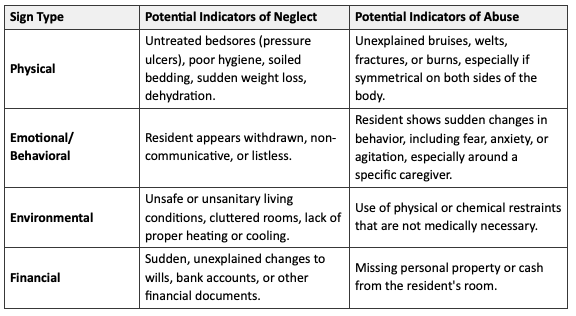
Contextualizing these signs is critical. Recent reports detail tragedies where families discovered severe neglect only after significant harm occurred, such as cases involving fatal Stage 4 bedsores during short-term rehab stays. This highlights that indicators like skin integrity and hygiene must be checked constantly, regardless of the expected length of stay.
When Concerns Arise: A Framework for Action and Advocacy
Document Everything: The First Step to Resolution
If you suspect substandard care, immediate and detailed documentation is your most powerful tool. Create a log that includes dates, times, specific observations, and the names of any staff members present or consulted. If appropriate and possible, take photographs of injuries or unsanitary conditions. This contemporaneous record serves as objective evidence, preventing facilities from dismissing your concerns as vague or unfounded recollections later on.
Escalating Your Concerns Effectively
Resolving issues typically requires following a specific chain of command to ensure the right people address the problem. Start by reporting the issue to the Charge Nurse or Unit Manager on duty. If the situation does not improve, escalate the complaint to the Director of Nursing, followed by the Facility Administrator. Should the facility fail to address the grievance, the next step is to file a formal complaint with the state's long-term care ombudsman program and the Department of Health to trigger an external investigation.
The Role of Legal Counsel in Protecting Your Loved One
When a facility fails to address serious concerns or when significant harm has already occurred, seeking legal guidance becomes a necessary step. Families need advocates who understand the complexities of elder care law and can hold negligent facilities accountable for their failures, securing justice for victims of nursing home abuse.
Experienced attorneys understand that issues like bedsores, falls, and malnutrition are often symptoms of systemic problems, such as understaffing and inadequate training. By pursuing legal action, families not only seek compensation for their loved one but also force facilities to improve their standards of care. This pressure protects future residents from similar harm.
Empowered Families are the Strongest Safeguard
An active, observant, and communicative family serves as the most critical component of a resident's safety net. The goal is not to be an adversary to the facility, but an essential partner in the care team. By vetting thoroughly, visiting often, communicating clearly, and knowing when to escalate concerns, families profoundly influence the quality of care their loved ones receive. This vigilance ensures that a senior's golden years are lived with the dignity and respect they deserve.
Image generated by Gemini