
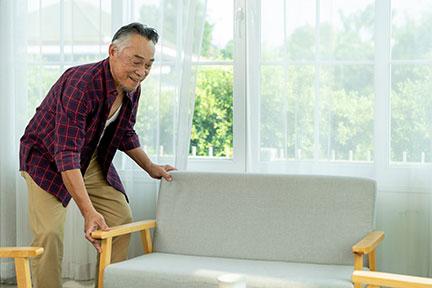
Most seniors want to "age in place," which means they want to stay in their long-term family home safely and comfortably. To do this, you need to actively change the living space to meet changing physical needs. While new window replacement Mississauga homeowners often focus on aesthetic upgrades, true safety improvements go deeper, focusing on lowering the risk of falls and enhancing daily functionality inside the home. This change isn't so much about remodeling as it is about making smart changes to the home's structure and features so that the person can stay independent, dignified, and at ease.
1. No tolerance for falls: putting the bathroom first
Statistically, the bathroom is the most dangerous room in the house for older adults because the floors are wet and slippery and the space is tight. Changes here are necessary for staying in the same place as you get older:
Grab bars are the most important change you can make. They should be put in the shower or tub area and next to the toilet. Most importantly, they need to be mounted horizontally and fastened directly to wall studs, not just drywall.
Step-Free Showers: A low-threshold or roll-in shower instead of a regular tub removes the biggest safety risk when bathing. You should also put in a permanent shower seat that folds down.
Raised Toilets: Toilets that are at a comfortable height make it easier on the knees and back when sitting and standing.
Non-Slip Surfaces: Put down non-slip mats or treat the floor and shower pan with anti-slip chemicals.
2. Getting around the house: how easy it is to get around and how easy it is to move
When people need mobility aids like walkers or wheelchairs, the layout of the home must make it easy to move between rooms and levels.
No Steps at the Front Door: There should be at least one path to the front door that doesn't have any steps. This usually means putting in a permanent or modular ramp system with strong handrails.
Wider Doorways: Most standard interior doorways are too narrow for a walker or wheelchair. Widening doorways that get a lot of traffic (ideally to 36 inches) makes it easy for people to get through.
Lever-Style Hardware: Switch out all of your round doorknobs for lever-style handles. This small change makes a huge difference for people with arthritis or weak hands.
Stairs are a big problem for homes with more than one story. A stair lift (or stair glide) is the best solution because it lets people safely and easily move between floors while still being able to get to all parts of the house. Make sure that handrails are firmly attached to both sides of all staircases.
3. Making things easier to see and use
Small, inexpensive changes that focus on light and reach can have a big effect on safety and comfort every day.
Upgrading the lighting: Put in brighter, higher-wattage bulbs and make sure the lighting is even throughout the house. Get rid of dark shadows in hallways, near stairs, and in closets. Motion-sensor lights in hallways and near the bed are very important for keeping people from falling when they go to the bathroom at night.
Get rid of all throw rugs, loose cables, and other things that could cause you to trip. If you need area rugs, make sure they are securely fastened with tape or a non-slip backing. We like low-pile carpets or smooth, non-slip floors better.
Accessible Storage: In the kitchen, put the things you use the most on lower shelves or drawers that pull out instead of fixed lower cabinets. This way, you won't have to bend down or reach up high to get to them.
Planning and Money Matters
Changes to help people age in place are an important investment in health and freedom. Simple changes, like putting in grab bars, don't cost much, but big changes to the structure, like adding walk-in showers, ramps, or stair lifts, can cost thousands. Homeowners should look into local and provincial funding programs, grants, and tax credits that are meant to help seniors make their homes more accessible. It is highly recommended to talk to a certified Occupational Therapist (OT) early on in the process. They can do a professional home safety assessment and give personalized advice based on the person's specific functional needs.