

You might notice it when a parent struggles to button a shirt, or perhaps a sudden fall shakes your confidence in their safety. This moment marks a major shift in your relationship. For the estimated four million family caregivers in New York State, this transition is a familiar reality. You are suddenly managing a mix of healthcare choices, financial concerns, and legal regulations specific to New York.
Caring for a loved one is personal, but handling it well takes a practical plan. Without a roadmap, the system can feel confusing and overwhelming. This guide offers the clear facts you need to make smart choices. It aims to help you protect your parents' well-being while honoring their wishes for the future.
Navigating the Legal Essentials for Elder Care in New York
This section details the critical legal documents and proceedings every New York family must understand to protect their aging parents' autonomy and assets.
Why You Can't Afford to Wait: Key Legal Documents
If a parent loses the ability to make decisions, having the right papers ready saves you from a long and expensive court battle. Planning ahead ensures your parent's voice is heard even if they cannot speak for themselves. In New York, three specific documents form the foundation of a strong care plan.
- Health Care Proxy: This document lets your parent name a trusted person, known as an agent, to make medical choices for them if they cannot communicate.
- Living Will: This document explains your parent's specific wishes regarding life-sustaining treatment. It guides the agent named in the Health Care Proxy on which medical measures to accept or refuse.
- Durable Power of Attorney (POA): A POA names an agent to handle money and business tasks. The "durable" part is vital in New York because it keeps the document valid even if your parent faces incapacity from conditions like Alzheimer's.
Understanding Guardianship Proceedings (Article 81)
If these documents are missing when a crisis happens, a family member or hospital might ask a court to appoint a guardian under Article 81 of the Mental Hygiene Law. This process removes your parent's right to decide for themselves and gives that power to someone selected by a judge. It is often expensive and can feel very intrusive. Recent reports highlight that New York's guardianship system has struggled with underfunding, prompting lawmakers to propose the "Good Guardianship Act" to protect vulnerable seniors. Setting up proxies and POAs early helps you avoid the uncertainty of this court system entirely.
The Role of an Elder Law Attorney
Estate planning usually handles what happens to wealth after death, but elder law focuses on the specific challenges of living longer. This includes planning for long-term care, handling incapacity, and qualifying for government benefits. An elder law attorney helps families build a strategy that covers all these bases. Consulting with an expert can be a crucial step when you are caring for aging parents. They can write the necessary documents, suggest ways to pay for care, and explain New York's specific regulations.
Facing the Financial Realities of Long-Term Care in NY
This section breaks down the high costs of elder care in New York and explains the main payment options, with a focus on Medicaid planning.
The Staggering Costs of Care in 2026
The price of long-term care can drain a family's savings quickly. Knowing the costs in New York is the first step toward building a plan that lasts. Prices continue to go up, which makes looking ahead more important than ever. For example, the cost of a semi-private nursing home room in New York rose 5% in just one year.
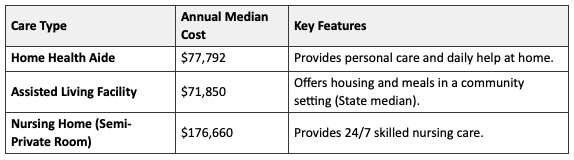
Navigating New York's Medicaid Rules
Most families cannot pay these high rates out-of-pocket for long. Medicaid pays for most long-term care in New York, but the rules to qualify are strict. For nursing home care, the state looks at all asset transfers made in the five years before you apply. This is called the "look-back" period. Gifting assets to family members during this time can cause a penalty that delays coverage. To fix the confusion around these benefits, Governor Hochul has proposed a "one-stop shop" for seniors to apply for programs. This aims to simplify the process, but strict asset rules still apply.
The Hidden Costs for Family Caregivers
Caregiving costs more than just the price of doctors and aides; it also hits the family budget hard. In New York, caregivers spend an average of over $8,000 a year of their own money on care expenses. Across the U.S., this equals about 26% of a caregiver's personal income. Work life suffers too, as 61% of working caregivers report issues like arriving late or taking unpaid time off. This unpaid labor is valued at $39 billion annually in New York alone, showing the massive economic role families play.
Building a Practical Care Plan and Support System
This section focuses on the practical and emotional aspects of creating a care plan, emphasizing communication and available resources.
Having the Conversation: Talking to Your Parents
Talking about money and future decline feels awkward, but starting early is better than waiting for a hospital visit to force the chat. Frame the talk around safety and ensuring their wishes are honored. You might ask, "Have you thought about who should make medical choices if you can't?" or "Can we look at your legal papers together to make sure we are ready?" Using a gentle, team-based approach makes the conversation feel like a partnership rather than a confrontation.
Aging in Place vs. Facility Care
Most seniors want to "age in place," meaning they stay in their own homes as they get older. New York State is backing this choice with new programs. Governor Hochul proposed the "CAPABLE" program to provide nursing and handyman services to help seniors live safely at home. Private services are also growing, with home care organizations expanding support for tasks like meal prep and mobility. When making a plan, look at these community options first to see if your parent can keep their independence.
Finding Resources and Support in New York
You do not have to handle this alone. New York provides resources specifically for caregivers. The New York State Office for the Aging (NYSOFA) helps connect families with local support programs. Joining a caregiver support group can also offer advice and a place to vent with people who understand the stress. Building a team that includes family, doctors, and legal experts creates a safety net for the future.
Your Next Steps on a Complicated Journey
Caring for an aging parent in New York requires endurance and patience. The rules of money and law can feel heavy, but taking small steps now can make a big difference. Be proactive. Start by talking openly, gathering your legal documents, and learning about the costs before an emergency happens. By breaking the job into smaller tasks, you can build a plan that keeps your parent safe and gives you peace of mind.
Image generated by Gemini