
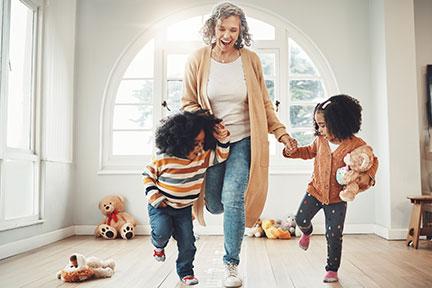
Young children build strength and coordination through active play that uses their whole bodies. Simple games and guided activities help them move with purpose, balance with control, and gain confidence in what their bodies can do. Gross motor activities give preschoolers a fun way to grow stronger, steadier, and more coordinated through everyday movement.
This article explores practical ways to support that growth through playful exercises that fit naturally into a child’s day. From creative obstacle courses to classic games that teach balance and focus, each activity encourages movement that builds both skill and joy.
Obstacle Course with Tunnels and Cones
Teachers or parents can set up cones for children to weave around and tunnels for them to crawl through. These tasks help improve spatial awareness, bilateral coordination, and overall strength. Adding simple challenges, such as hopping over a rope or stepping on marked spots, increases variety and keeps children engaged while learning to follow directions and move with purpose.
An obstacle course with tunnels and cones fits well into gross motor activities for preschoolers because it encourages movement in different directions and builds body control through active play. This type of course works well indoors or outdoors and uses basic materials found at home or school, promoting physical development in a fun and structured way without needing special equipment.
Balance Beam Walking on a Low Beam
A low balance beam helps preschoolers build coordination and body control in a safe way. It allows them to practice steady steps without fear of falling. A simple wooden beam or even a taped line on the floor works well for beginners.
Children learn to focus their eyes forward and keep their arms out for balance. This activity strengthens their core and leg muscles while improving posture. It also helps them understand how to shift weight from one foot to the other.
Teachers and parents can increase the challenge by asking children to walk backward or sideways. They can also add small obstacles or curves to make the task more interesting. With regular practice, preschoolers gain confidence and better physical awareness.
Jumping Games like Hopscotch
Hopscotch helps preschoolers build balance, coordination, and control. It encourages them to jump with purpose and land safely, which strengthens leg muscles and improves stability. Children also practice counting as they move through the numbered squares, adding a simple learning element to play.
The game requires only chalk and a flat surface, so it works well indoors or outdoors. Teachers or parents can adjust the pattern or number of squares to match each child’s ability. This flexibility keeps the activity fun and safe for different ages.
In addition, hopscotch promotes turn-taking and patience. Children wait for their turn, cheer for others, and follow simple rules. These small social lessons support cooperation and respect during group play.
Other jumping games, such as jumping over lines or small objects, provide similar benefits. They challenge children to judge distance, control their movements, and stay focused. As a result, these activities help develop both physical coordination and attention skills.
Ball Toss and Catch Activities
Ball toss and catch games help preschoolers build coordination and focus. Children learn to track movement, react quickly, and control their arm and hand motions. These simple actions support balance and timing, which are key parts of gross motor growth.
A soft foam or rubber ball works best for safety and comfort. Adults can start with short distances, then slowly increase space as children improve. This gradual change keeps the game fun and challenging without frustration.
Different throws, such as underhand or two-handed tosses, add variety. Partners can also switch roles to practice both throwing and catching. These small adjustments keep children engaged and help them gain confidence in their physical control.
Playing indoors or outside both works well. However, outdoor play gives more room to move and explore. Regular practice builds coordination and helps children link movement with focus and teamwork.
Animal Walks (e.g., Bear Crawl, Frog Jumps)
Animal walks help preschoolers build strength, balance, and coordination through playful movement. Each activity imitates how an animal moves, which keeps children active and engaged while they develop body control.
For example, the bear crawl strengthens arms, legs, and core muscles as children move on hands and feet. The frog jump builds leg power and balance through short, controlled hops. Both activities also support spatial awareness and body planning skills.
Teachers or parents can add animal walks to obstacle courses or short movement breaks. These activities require little space or equipment, making them easy to include at home or in the classroom.
Children often enjoy pretending to be different animals, which keeps the activity fun and encourages participation. As a result, animal walks can help children practice gross motor skills in a playful and natural way.
Conclusion
Gross motor activities help preschoolers gain better control of their bodies through play. Simple actions such as jumping, tossing a ball, or balancing on one foot build coordination and confidence.
These activities also support muscle strength and body awareness, which prepare children for more complex movements later. In addition, group play encourages cooperation and social growth.
Parents and teachers can use short, fun sessions each day to keep kids active and engaged. With regular practice, children move more smoothly, stay healthy, and enjoy physical activity as a natural part of daily life.
All activities should be age-appropriate and supervised by an adult. If you have concerns about your child’s motor development, consult a pediatrician or therapist.