
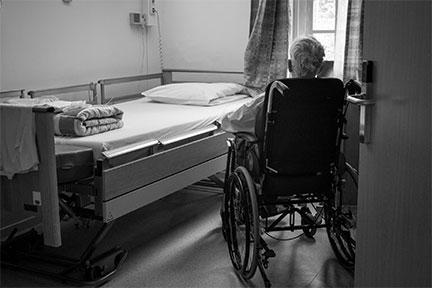
Many families who place their loved ones in a long-term care facility, such as a nursing home, notice changes in their health or behavior. Some changes reflect the realities of aging, or even an adjustment period, but others indicate issues with daily care.
Determining the difference can be stressful, especially as you don’t want to wrongly assume carer harm and seek the help of a nursing home lawyer. However, you also don’t want to overlook genuine risks and dangers. Gaining insight into how professionals evaluate neglect vs. natural decline can help you respond appropriately.
TL;DR
When to Escalate Concerns About a Loved One’s Care
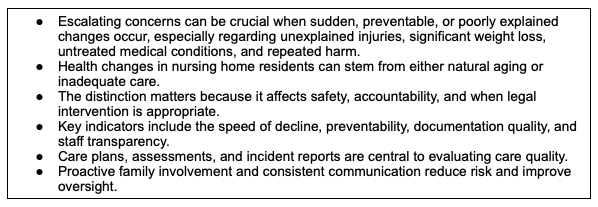
Observation can turn into action when you realize that changes to your family member have been sudden, preventable, or poorly explained by their nursing home. You may decide to escalate when you’ve noticed:
- Repeated harm
- Injuries that can’t be explained
- Significant weight loss
It is also essential to investigate untreated medical conditions and cases of nursing homes refusing to share care plans and records. How you escalate the situation is personal to you, but you may start by
- Sharing your concerns with the nursing home staff
- Lodging a formal complaint
- Consulting a nursing home lawyer
Escalation also doesn’t have to mean litigation right away. You are within your rights to request an external medical evaluation, contact an ombudsperson, or file a complaint with an area regulator. Many families explore legal action when harm continues or the nursing home fails to correct known problems.
Why the Distinction Between Aging and Neglect Matters
Distinguishing between natural aging and neglect is crucial because it affects trust, safety, and the timing of interventions. Even with attentive care, aging-related changes, such as cognitive decline and reduced mobility, still happen.
However, nursing home staff must adhere to strict care standards that are designed to prevent avoidable harm. Responsibility for meeting these standards rests with staff, administrators, and regulators, especially when residents have limited mobility, a chronic illness, or dementia.
Legally, distinguishing between aging and neglect matters because it determines if a problem is actionable through the legal system. Natural decline is generally not an issue for the courts. However, neglect may result in penalties, civil liability, and possible compensation.
Legal Standards: What Constitutes Neglect vs. Natural Decline?
Not every poor outcome in a nursing home requires legal action. Concerns can rise to an actionable or reportable level when one or more of these thresholds are met:
- A pattern of harm or neglect
- Preventable harm
- Serious injuries or deterioration
- Documented deviations from care plans
- Failure to correct known problems after prior problems or complaints
Regulatory bodies may investigate after one serious incident, but civil courts normally require proof of a nursing home’s failures causing harm. Legally, nursing home neglect describes a staff or facility failure to provide the essential services required to avoid harm, pain, and mental anguish to a resident. These include
- Food
- Water
- Medication
- Hygiene
- Safety
- Emotional care
Failure to meet these basic needs often stems from understaffing, inadequate training, and carelessness. Nursing home neglect becomes abuse when these essential services are intentionally withheld.
In contrast, acceptable age-related or natural decline refers to deterioration in a resident that occurs while they are being monitored and provided with appropriate care.
To determine the difference, courts must assess the harm and decide whether or not it could have been prevented. If the outcome is the same despite care plans, staffing, and all essential services, a resident’s decline may be considered natural.
If those crucial services or other safeguards weren’t in place, the courts may classify the outcome as neglect. In disputes, a number of forms of evidence carry a great deal of weight in proving or disproving nursing home neglect, including:
- Medical records and care plans
- Incident reports
- Expert medical opinions
- Staff statements
- Family observations
- Photos and videos
The standards for reporting, investigation, and available remedies differ from state to state, particularly for mandatory reporting laws, damage caps, and statutes of limitation. Some regions make it mandatory to report suspected neglect, while others rely on complaints processes. Available damages also vary from state to state, making it important to seek the services of legal professionals in your local area.
Who Evaluates Nursing Home Neglect Claims?
Different entities evaluate neglect claims depending on the stage and review purpose:
- Regulatory agencies to determine the facility’s compliance with state and federal care standards; they can issue corrective orders, citations, and fines
- Ombudsmen to advocate for residents, investigate complaints, and help resolve disputes without litigation
- Medical experts to assess medical causation, standards of care, and whether harm was preventable
- Courts to determine legal liability, causation, and compensation
Legal Costs and Timeframes
There can be significant costs and time associated with legal proceedings.
- Civil cases can take several months or years, depending on the available evidence, the complexity of the case, and the need for settlement. Even the legal fees can vary based on jurisdiction and case structure.
- Some lawyers require upfront costs, while others handle nursing home neglect cases on a contingency fee basis. This means that they only collect fees if compensation is recovered.
- Families need to be aware that overall costs increase with expert witnesses, medical record reviews, and prolonged litigation.
Key Indicators to Evaluate Health and Care Changes
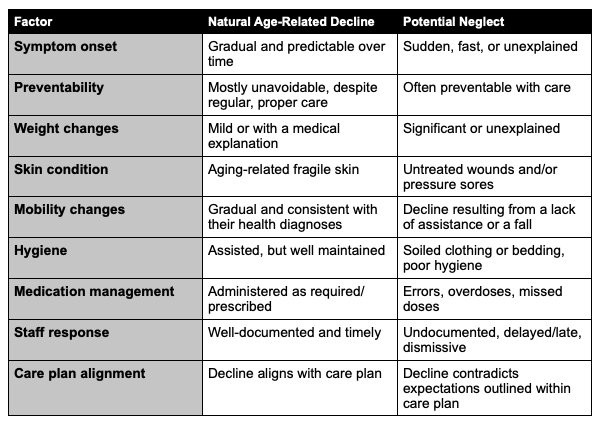
Several indicators help assess whether a resident is being neglected or simply experiencing natural decline. These include:
- The speed at which symptoms appear
- Whether the problems they’re experiencing are preventable
- How consistently their care has been documented
- The openness of staff communication with families
All these indicators should reflect a pattern, rather than be isolated incidents. When families feel uncertainty about their family member’s care, they can seek outside support from professionals experienced in nursing home care standards, such as a nursing home lawyer.
Natural Age-Related Decline vs. Neglect Indicators
Evidence Types in Natural Decline vs. Neglect

Processes and Procedures for Care Quality
Healthcare professionals, legal experts, and the loved ones of residents in nursing care facilities shouldn’t rely on assumptions to determine care quality. Instead, they should depend on the systems, workflows, and supporting practices that the most highly regarded nursing homes have in place. These include care plans, health assessments, and incident reports.
Care plans typically outline residents’ daily assistance requirements, monitoring schedules, and medical needs. Routine health assessments detail medical records and show whether health changes are sudden or gradual. Finally, incident reports focus on transparency and documenting medication issues, infections, falls, and similar incidents.
This information, along with regular visits, third-party evaluations, and general observation, can be crucial in determining natural decline or neglect. Failures in these processes and procedures often form the foundation of neglect claims. Common procedural missteps include:
- Ignoring doctors’ orders
- Not updating care plans after health changes
- Inadequate documentation
- Missing incident reports
- Inconsistent medical and medication records
These missteps can demonstrate preventable harm, which may carry legal consequences like civil liability or regulatory penalties.
Reducing Risks, Fear of False Accusations, and Ensuring Transparency
Specific actions and behaviors by families and care providers can go a long way toward reducing risk and improving transparency surrounding neglect and natural decline. Proactive family involvement, such as attending care meetings, can help align expectations and determine communication methods.
Clear documentation and adhering to procedures can be a protective measure for both care providers and residents. A fear of false accusations is often linked to poor records and inconsistent communication, rather than transparent and well-documented care.
Consistent reporting habits among staff and worker accountability can improve continuity of care, potentially reducing health or safety issues. What’s more, when residents, their loved ones, and care staff ask questions about health and care changes, it can foster shared understanding and a focus on well-being rather than blame.
Evaluating health changes in nursing home residents to determine whether they reflect natural decline or neglect requires careful observation, documentation, and a thorough understanding of the resident's condition. By reviewing care plans and medical records, understanding the intricacies of age-related conditions and illnesses, and assessing communication methods, families and their legal teams can make fair, informed decisions about whether their loved one’s decline is expected or warrants concern.
Author Jenna van der Hoorn is an experienced copywriter with extensive experience in the legal niche, including nursing home abuse, personal injury law, divorce, auto and motorcycle accidents, product liability, and lawsuits.
Photo by Annabel Podevyn on Unsplash