|
Can the lowly beet now be regarded as one of the numerous superfoods that are a must-have in our daily diets?
|
|
In recent years Nature's Daily Defense witnessed the news coming out of the nation's leading nutritional research centers pointing to the real health benefits of including more antioxidants in your daily diet.
|
|
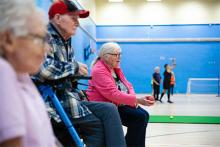
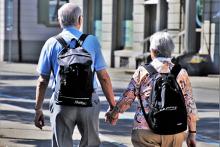
Here is a little good news for those of us caring for a loved one with Alzheimer's or memory impairment. Walking may slow cognitive decline in adults with mild cognitive impairment (MCI) and Alzheimer's disease, as well as in healthy adults. Walking five miles per week protects the brain structure over 10 years in people with Alzheimer's and MCI, especially in areas of the brain's key memory and learning centers, according to Cyrus Raji, Ph.D., from the Department of Radiology at the University of Pittsburgh in Pennsylvania. It was also found that these same people had a slower decline in memory loss over five years.
|
|
A new study published in the Journal of the American Geriatrics Society proves that the right kind of brain training can produce cognitive improvements that transfer to real-world skills. The study found that older drivers who completed 10 sessions of speed-of-processing training or reasoning training had an approximately 50 percent reduction in at-fault motor-vehicle collisions compared to the control group.
|
|
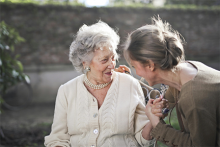
As the champagne corks are popping this New Year’s Eve, the first American Baby Boomers will turn age 65. Members of the demographic bulge that transformed American politics and culture are expected to usher in yet another momentous change - a huge increase in the number of Alzheimer’s disease patients.
|
|
Citing projections that by 2030 America's senior population will reach 20 percent of the population – 78 million people – and new survey information showing that Americans feel increasingly helpless about their personal cancer risk as they grow older, the American Institute for Cancer Research (AICR) has highlighted the emerging research showing that even in later life, many cancers can be delayed or prevented through regular physical activity and a plant-based diet.
|
|
Heavy smoking in midlife is associated with a 157 percent increased risk of developing Alzheimer's disease and a 172 percent increased risk of developing vascular dementia, according to a Kaiser Permanente study published in the Archives of Internal Medicine. This is the first study to look at the long-term consequences of heavy smoking on dementia.
|
|
Our nation's elderly population is dying from a silent killer at an alarming rate. Each year, falls are the leading cause of death from injury in adults over the age of 65.(1) Approximately one-third of older adults fall each year.(1) And the Centers for Disease Control and Prevention estimates that the cost of all falls will be nearly $55 billion by 2020. Amedisys, a leading provider of home health and hospice care, is working to change these unacceptable statistics by educating seniors on 10 easy tips to help prevent falls.
|
|
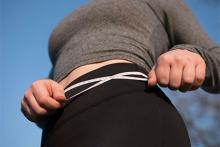
David Zinczenko and Matt Goulding, the authors of the “Eat This, Not That!” book series, have revealed the “20 Worst Foods in America.” The list, featured in the newest book “Eat This, Not That! 2011,” includes the nation’s worst caloric catastrophes at major restaurant and fast-food chains across the country. The books in the popular “Eat This, Not That!” series, which currently have more than six million copies in print and now 11 editions, identify unhealthy foods – in fast-food chains, restaurant chains and grocery stores – and offer healthier alternatives.
|
|
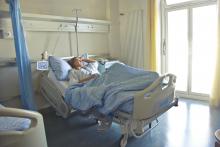
A 54-year-old Italian man has become the first patient to surpass 1,000 days of support with the SynCardia temporary Total Artificial Heart while waiting for a matching donor heart.
|
|
|
|
|
Page 1 of 9 |